Friday, July 2, 2010

a posi spin on 2012


2012: Time for Change presents an optimistic alternative to apocalyptic doom and gloom. Directed by Emmy Award nominee João Amorim, the film follows journalist Daniel Pinchbeck, author of the bestselling "2012: The Return of Quetzalcoatl," on a quest for a new paradigm that integrates the archaic wisdom of tribal cultures with the scientific method. As conscious agents of evolution, we can redesign post-industrial society on ecological principles to make a world that works for all. Rather than breakdown and barbarism, 2012 heralds the birth of a regenerative planetary culture where collaboration replaces competition, where exploration of psyche and spirit becomes the new cutting edge, replacing the sterile materialism that has pushed our world to the brink.


Tuesday, May 18, 2010

Haiti burns donated packets of Monsanto seeds

This is the coolest thing I've heard in a while...

Monsanto is donating 60,000 seed packets... of which farmers in Haiti will burn.


http://www.huffingtonpost.com/beverly-bell/haitian-farmers-commit-to_b_578807.html


"A new earthquake" is what peasant farmer leader Chavannes Jean-Baptiste of the Peasant Movement of Papay (MPP) called the news that Monsanto will be donating 60,000 seed sacks (475 tons) of hybrid corn seeds and vegetable seeds, some of them treated with highly toxic pesticides. The MPP has committed to burning Monsanto's seeds, and has called for a march to protest the corporation's presence in Haiti on June 4, for World Environment Day.

In an open letter sent of May 14, Chavannes Jean-Baptiste, the Executive Director of MPP and the spokesperson for the National Peasant Movement of the Congress of Papay (MPNKP), called the entry of Monsanto seeds into Haiti "a very strong attack on small agriculture, on farmers, on biodiversity, on Creole seeds..., and on what is left our environment in Haiti."[1] Haitian social movements have been vocal in their opposition to agribusiness imports of seeds and food, which undermines local production with local seed stocks. They have expressed special concern about the import of genetically modified organisms (GMOs).

For now, without a law regulating the use of GMOs in Haiti, the Ministry of Agriculture rejected Monsanto's offer of Roundup Ready GMO seeds. In an email exchange, a Monsanto representative assured the Ministry of Agriculture that the seeds being donated are not GMO.

Elizabeth Vancil, Monsanto's Director of Development Initiatives, called the news that the Haitian Ministry of Agriculture approved the donation "a fabulous Easter gift" in an April email.[2] Monsanto is known for aggressively pushing seeds, especially GMO seeds, in both the global North and South, including through highly restrictive technology agreements with farmers who are not always made fully aware of what they are signing. According to interviews by this writer with representatives of Mexican small farmer organizations, they then find themselves forced to buy Monsanto seeds each year, under conditions they find onerous and at costs they sometimes cannot afford.

The hybrid corn seeds Monsanto has donated to Haiti are treated with the fungicide Maxim XO, and the calypso tomato seeds are treated with thiram.[3] Thiram belongs to a highly toxic class of chemicals called ethylene bisdithiocarbamates (EBDCs). Results of tests of EBDCs on mice and rats caused concern to the U.S. Environmental Protection Agency (EPA), which then ordered a special review. The EPA determined that EBDC-treated plants are so dangerous to agricultural workers that they must wear special protective clothing when handling them. Pesticides containing thiram must contain a special warning label, the EPA ruled. The EPA also barred marketing of the chemicals for many home garden products, because it assumes that most gardeners do not have adequately protective clothing.[4] Monsanto's passing mention of thiram to Ministry of Agriculture officials in an email contained no explanation of the dangers, nor any offer of special clothing or training for those who will be farming with the toxic seeds.

Haitian social movements' concern is not just about the dangers of the chemicals and the possibility of future GMO imports. They claim that the future of Haiti depends on local production with local food for local consumption, in what is called food sovereignty. Monsanto's arrival in Haiti, they say, is a further threat to this.

"People in the U.S. need to help us produce, not give us food and seeds. They're ruining our chance to support ourselves," said farmer Jonas Deronzil of a peasant cooperative in the rural region of Verrettes.[5]

Monsanto's history has long drawn ire from environmentalists, health advocates, and small farmers, going back to its production of Agent Orange during the Vietnam war. Exposure to Agent Orange has caused cancer in an untold number of U.S. Veterans, and the Vietnamese government claims that 400,000 Vietnamese people were killed or disabled by Agent Orange, and 500,000 children were born with birth defects as a result of their exposure.[6]

Monsanto's former motto, "Without chemicals, life itself would be impossible," has been replaced by "Imagine." Its web site home page claims it "help[s] farmers around the world produce more while conserving more. We help farmers grow yield sustainably so they can be successful, produce healthier foods... while also reducing agriculture's impact on our environment."[7] The corporations' record does not support the claims.

Together with Syngenta, Dupont and Bayer, Monsanto controls more than half of the world's seeds.[8] The company holds almost 650 seed patents, most of them for cotton, corn and soy, and almost 30% of the share of all biotech research and development. Monsanto came to own such a vast supply by buying major seed companies to stifle competition, patenting genetic modifications to plant varieties, and suing small farmers. Monsanto is also one of the leading manufacturers of GMOs.

As of 2007, Monsanto had filed 112 lawsuits against U.S. farmers for alleged technology contract violations or GMO patents, involving 372 farmers and 49 small agricultural businesses in 27 different states. From these, Monsanto has won more than $21.5 million in judgments. The multinational appears to investigate 500 farmers a year, in estimates based on Monsanto's own documents and media reports.[9]

"Farmers have been sued after their field was contaminated by pollen or seed from someone else's genetically engineered crop [or] when genetically engineered seed from a previous year's crop has sprouted, or 'volunteered,' in fields planted with non-genetically engineered varieties the following year," said Andrew Kimbrell and Joseph Mendelson of the Center for Food Safety.[10]

In Colombia, Monsanto has received upwards of $25 million from the U.S. government for providing Roundup Ultra in the anti-drug fumigation efforts of Plan Colombia. Roundup Ultra is a highly concentrated version of Monsanto's glyphosate herbicide, with additional ingredients to increase its lethality. Colombian communities and human rights organizations have charged that the herbicide has destroyed food crops, water sources and protected areas, and has led to increased incidents of birth defects and cancers.

Vía Campesina, the world's largest confederation of farmers with member organizations in more than sixty countries, has called Monsanto one of the "principal enemies of peasant sustainable agriculture and food sovereignty for all peoples."[11] They claim that as Monsanto and other multinationals control an ever larger share of land and agriculture, they force small farmers out of their land and jobs. They also claim that the agribusiness giants contribute to climate change and other environmental disasters, an outgrowth of industrial agriculture.[12]

The Vía Campesina coalition launched a global campaign against Monsanto last October 16, on International World Food Day, with protests, land occupations, and hunger strikes in more than twenty countries. They carried out a second global day of action against Monsanto on April 17 of this year, in honor of Earth Day.

Non-governmental organizations in the U.S. are challenging Monsanto's practices, too. The Organic Consumers Association has spearheaded the campaign "Millions Against Monsanto," calling on the company to stop intimidating small family farmers, stop marketing untested and unlabeled genetically engineered foods to consumers, and stop using billions of dollars of U.S. taypayers' money to subsidize GMO crops.[13]

The Center for Food Safety has led a four-year legal challenge to Monsanto that has just made it to the U.S. Supreme Court. After successful litigation against Monsanto and the U.S. Department of Agriculture for illegal promotion of Roundup Ready Alfalfa, the court heard the Center for Food Safety's case on April 27. A decision on this first-ever Supreme Court case about GMOs is now pending.[14]

"Fighting hybrid and GMO seeds is critical to save our diversity and our agriculture," Jean-Baptiste said in an interview in February. "We have the potential to make our lands produce enough to feed the whole population and even to export certain products. The policy we need for this to happen is food sovereignty, where the county has a right to define it own agricultural policies, to grow first for the family and then for local market, to grow healthy food in a way which respects the environment and Mother Earth."

Monday, May 17, 2010

Smoothie Bike

I would like to see a worldwide convergence of artists, engineers, social justice advocates and environmentalists. Cool things like this would probably happen:


REBECCA ROBERTS, host:

At the Sunday farmer's market at Baltimore, Maryland, you can find everything from organic produce to soap made from goat's milk. Now, one enterprising vendor is using a bicycle to literally pedal his wares. Donna Marie Owens has more.

DONNA MARIE OWENS: What do you get when you combine a bicycle, fresh fruit and a young entrepreneur with a green imagination? Well, envision a frosty drink made by a bicycle-powered vendor.

Natan Lawson is 21. His stand at the Baltimore farmer's market is called - now listen closely - Wheely Good Smoothie.

Mr. NATAN LAWSON (Wheely Good Smoothie): I first saw pedal-powered machines when I was interning on a farm in Oregon. They have a pedal-powered nut-sheller and I thought it was cool, didn't see the connection to smoothies yet.

OWENS: But after Lawson spotted a bike blender in Vermont, an idea took root. He studied diagrams on the Internet. He enlisted help from a local bike shop.

(Soundbite of blender)

OWENS: The result? Two bright and shiny mosaic-covered creations that resemble stationary bikes at the gym. A third kiddy bicycle is attached to a stuffed brown hobby horse.

(Soundbite of music)

OWENS: The smoothie stand is raking them in at the lively open-air market. Lawson describes one of the gourmet flavors he's created.

Mr. LAWSON: I have the Fuzz, which is two whole peaches, organic lemonade and ground chipotle spice.

OWENS: You're probably wondering how the eco-friendly contraption works. The rear wheel drives a rod that powers a blender on the back of the bike.

Unidentified Woman: Better than a spin class.

OWENS: For five bucks, customers can put the pedal to the metal and whip up their own smoothies. It's 50 cents more if Lawson provides the muscle.

And how long does it take?

Mr. LAWSON: Depending on the smoothie, the bike and the person, somewhere between 15 seconds and 30 seconds.

OWENS: I hopped on and did my best Lance Armstrong impression.

(Soundbite of blender)

Mr. LAWSON: Keep going, keep going.

OWENS: Not to brag, but I was greased lightning. That is until a wardrobe malfunction.

Mr. LAWSON: (unintelligible)

OWENS: My sequined ballet flats definitely not for cycling.

What if you don't have enough energy?

(Soundbite of laughter)

OWENS: As you might imagine, Lawson does an awful lot of pedaling, but more than half his customers opt to power their own drink.

Mr. LAWSON: A lot of people, they come to the market with their friends and they're cheering them on. So, it goes to their head and they start pedaling like a racer. But it's good. You get a smooth smoothie.


www.wheelygoodsmoothies.com


Friday, April 30, 2010

New Direction...

Ok so maybe that last entry wasn't so positive. I'd like this blog to be like an after dinner mint...
You read/see/hear the news and it leaves a bad taste in your mouth, so you turn to the Posi Posse for a little refreshment...


Let that bad news motivate you, then take on what bothers you with minty fresh breath. I mean -hope. Right, hope... let's stop with the analogies now.


MICHAEL POLLAN recently received a place on Times' 100 Most Influential people (we'll ignore the fact that Sarah Palin, Lady Gaga, and Glenn f'ing Beck are also on there... then again they have influenced me by making my blood boil on many occasion). You know what - forget it, this list is a bunch of garbage. Anything that Glenn Beck touches turns to shit.


I'm having a tough time being positive today, but here we go...


So as most people probably know, many parts of the world are without electricity. It's true, there was once a time when no one had it and life went on... probably quite well, but it is 2010 and there are businesses where there once were none, schools where there once were none (and giving out homework), and so forth and so on... electricity would mean businesses could stay open later, light after the sun goes down means children could study. Electricity is convenient.
Wouldn't it be nice if developing nations had a sustainable, renewable source of energy?
Well it's not just a nice thought, it's a reality through solar energy -


from http://joshweinstein.wordpress.com/2010/03/06/solar-energy-in-the-developing-world/

"Negros Women for Tomorrow Foundation (NWTF) is in the process of rolling out a pilot program to distribute solar lanterns to its clients. The purchase is funded through an asset acquisition loan. It costs about $70 USD and the loan cycle is either one or two years. How do solar lanterns serve the triple bottom line? I’m glad you asked.

SunTransfer solar lantern.

When a rural community has no electricity, it does not mean that nighttime means total darkness. Traditional lanterns run on kerosene, which needs to be purchased in large amounts to light a community. In contrast, solar lanterns use the free energy offered by the sun, eliminating the need to purchase kerosene. This saves the user big dollars in the long-run, particularly when the battery for a solar lantern lasts up to 3-4 years. The lanterns distributed by NWTF have three settings: high (2 hours), medium (8 hours), and low (200 hours). Reducing kerosene expenses means lights can be kept on longer. This means the store can stay open longer, the kids can study at night, and businesses are more profitable. The impact on a household and the community at-large is dramatic."


Much of the Philippines - the areas in red - is less than 75% electrified.


as of April 23, Negros Women for Tomorrow Foundation has begun posting loans for renewable energy products on Kiva (www.kiva.org) who I've mentioned in an earlier post.

Thursday, April 29, 2010

10 Reasons Why GM Crops Won't Feed The World

10 reasons why GM won't feed the world
Mark Anslow
The Ecologist
March 1, 2008
Genetic modification can't deliver a safe, secure future food supply. Here's why...


1. Failure to deliver
Despite the hype, genetic modification consistently fails to live up to industry claims. Only two GM traits have
ever made it to market: herbicide resistance and BT toxin expression (see below). Other promises of genetic
modification have failed to materialise. The much vaunted GM ‘golden rice’ – hailed as a cure to vitamin A
deficiency – has never made it out of the laboratory, partly because in order to meet recommended levels of
vitamin A intake, consumers would need to eat 12 bowls of the rice every day.1 In 2004, the Kenyan
government admitted that Monsanto’s GM sweet potatoes were no more resistant to feathery mottle virus
than ordinary strains, and in fact produced lower yields.2 And in January 2008, news that scientists had
modified a carrot to cure osteoporosis by providing calcium had to be weighed against the fact that you
would need to eat 1.6 kilograms of these vegetables each day to meet your recommended calcium intake.3


2. Costing the Earth
GM crops are costing farmers and governments more money than they are making. In 2003, a report by the
Soil Association estimated the cost to the US economy of GM crops at around $12 billion (£6 billion) since
1999, on account of inflated farm subsidies, loss of export orders and various seed recalls.4 A study in Iowa
found that GM soyabeans required all the same costs as conventional farming but, because they produced
lower yields (see below), the farmers ended up making no profit at all.5 In India, an independent study
found that BT cotton crops were costing farmers 10 per cent more than non-BT variants and bringing in 40
per cent lower profits.6 Between 2001 and 2005, more than 32,000 Indian farmers committed suicide, most
as a result of mounting debts caused by inadequate crops.7


3. Contamination and gene escape
No matter how hard you try, you can never be sure that what you are eating is GM-free. In a recent article,
the New Scientist admitted that contamination and cross-fertilisation between GM and non-GM crops ‘has
happened on many occasions already’.8 In late 2007, US company Scotts Miracle-Gro was fined $500,000 by
the US Department of Agriculture when genetic material from a new golf-course grass Scotts had been
testing was found in native grasses as far as 13 miles away from the test sites, apparently released when
freshly cut grass was caught and blown by the wind.9 In 2006, an analysis of 40 Spanish conventional and
organic farms found that eight were contaminated with GM corn varieties, including one farmer whose crop
contained 12.6 per cent GM plants.


4. Reliance on pesticides
Far from reducing dependency on pesticides and fertilisers, GM crops frequently increase farmers’ reliance on
these products. Herbicide-resistant crops can be sprayed indiscriminately with weedkillers such as
Monsanto’s ‘Roundup’ because they are engineered to withstand the effect of the chemical. This means that
significantly higher levels of herbicide are found in the final food product, however, and often a second
herbicide is used in the late stages of the crop to promote ‘dessication’ or drying, meaning these crops
receive a double dose of harmful chemicals.10 BT maize, engineered to produce an insecticidal toxin, has
never eliminated the use of pesticides,11 and because the BT gene cannot be ‘switched off’ the crops
continue to produce the toxin right up until harvest, reaching the consumer at its highest possible
concentrations.12


5. ‘Frankenfoods’
Despite the best efforts of the biotech industry, consumers remain staunchly opposed to GM food. In 2007,
the vast majority of 11,700 responses to the Government’s consultation on whether contamination of organic
food with traces of GM crops should be allowed were strongly negative. The Government’s own ‘GM Nation’
debate in 2003 discovered that half of its participants ‘never want to see GM crops grown in the United
Kingdom under any circumstances’, and 96 per cent thought that society knew too little about the health
impacts of genetic modification. In India, farmers’ experience of BT cotton has been so disastrous that the
Maharashtra government now advises that farmers grow soybeans instead. And in Australia, over 250 food
companies lodged appeals with the state governments of New South Wales and Victoria over the lifting of
bans against growing GM canola crops.13


6. Breeding resistance
Nature is smart, and there are already reports of species resistant to GM crops emerging. This is seen in the
emergence of new ‘superweeds’ on farms in North America – plants that have evolved the ability to
withstand the industry’s chemicals. A report by then UK conservation body English Nature (now Natural
England), in 2002, revealed that oilseed rape plants that had developed resistance to three or more
herbicides were ‘not uncommon’ in Canada.14 The superweeds had been created through random crosses
between neighbouring GM crops. In order to tackle these superweeds, Canadian farmers were forced to
resort to even stronger, more toxic herbicides.15 Similarly, pests (notably the diamondback moth) have been
quick to develop resistance to BT toxin, and in 2007 swarms of mealy bugs began attacking supposedly pestresistant
Indian cotton.


7. Creating problems for solutions
Many of the so-called ‘problems’ for which the biotechnology industry develops ‘solutions’ seem to be notions
of PR rather than science. Herbicide-resistance was sold under the claim that because crops could be doused
in chemicals, there would be much less need to weed mechanically or plough the soil, keeping more carbon
and nitrates under the surface. But a new long-term study by the US Agricultural Research Service has
shown that organic farming, even with ploughing, stores more carbon than the GM crops save.16 BT cotton
was claimed to increase resistance to pests, but farmers in East Africa discovered that by planting a local
weed amid their corn crop, they could lure pests to lay their eggs on the weed and not the crop.17


8. Health risks
The results of tests on animals exposed to GM crops give serious cause for concern over their safety. In
1998, Scottish scientists found damage to every single internal organ in rats fed blightresistant GM potatoes.
In a 2006 experiment, female rats fed on herbicide-resistant soybeans gave birth to severely stunted pups,
of which half died within three weeks. The survivors were sterile. In the same year, Indian news agencies
reported that thousands of sheep allowed to graze on BT cotton crop residues had died suddenly. Further
cases of livestock deaths followed in 2007. There have also been reports of allergy-like symptoms among
Indian labourers in BT cotton fields. In 2002, the only trial ever to involve human beings appeared to show
that altered genetic material from GM soybeans not only survives in the human gut, but may even pass its
genetic material to bacteria within the digestive system.18


9. Left hungry
GM crops have always come with promises of increased yields for farmers, but this has rarely been the case.
A three-year study of 87 villages in India found that non-BT cotton consistently produced 30 per cent higher
yields than the (more expensive) GM alternative.19 It is now widely accepted that GM soybeans produce
consistently lower yields than conventional varieties. In 1992, Monsanto’s own trials showed that the
company’s Roundup Ready soybeans yield 11.5 per cent less on harvest. Later Monsanto studies went on to
reveal that some trials of GM canola crops in Australia actually produced yields 16 per cent below the non-
GM national average.20


10. Wedded to fertilizers and fossil fuels
No genetically modified crop has yet eliminated the need for chemical fertilisers in order to achieve expected
yields. Although the industry has made much of the possibility of splicing nitrogen-fixing genes into
commercial food crops in order to boost yields, there has so far been little success. This means that GM crops
are just as dependent on fossil fuels to make fertilisers as conventional agriculture. In addition to this, GM
traits are often specifically designed to fit with large-scale industrial agriculture. Herbicide resistance is of no
real benefit unless your farm is too vast to weed mechanically, and it presumes that the farmers already
farm in a way that involves the chemical spraying of their crops. Similarly, BT toxin expression is designed to
counteract the problem of pest control in vast monocultures, which encourage infestations. In a world that
will soon have to change its view of farming – facing as it does the twin challenges of climate change and
peak oil – GM crops will soon come to look like a relic of bygone practices.
Mark Anslow is the Ecologist’s senior reporter
References


1 http://www.gmwatch.org/archive2.asp?arcid=8521
2 http://www.greens.org/s-r/35/35-03.html
3 Telegraph, 14th January 2008, http://tinyurl.com/38e2rp
4 Soil Association, 2007, http://tinyurl.com/33bfuh
5 http://ianrnews.unl.edu/static/0005161.shtml
6 http://www.i-sis.org.uk/IBTCF.php
7 Indian Muslims, 20th November 2007, http://tinyurl.com/2u7wy7
8 New Scientist, ‘Genes for Greens’, 5th January 2007, Issue 2637, Vol 197
9 http://gmfoodwatch.tribe.net/thread/a1b77b8b-15f5-4f1d-86df-2bbca5aaec70
10 http://www.prospect-magazine.co.uk/article_details.php?id=9927
11 http://www.btinternet.com/~nlpWESSEX/Documents/usdagmeconomics.htm
12 http://www.prospect-magazine.co.uk/article_details.php?id=9927
13 http://www.indybay.org/newsitems/2007/11/27/18463803.php
14 http://www.english-nature.org.uk/pubs/publication/PDF/enrr443.pdf
15 Innovations Report, 20th June 2005, http://tinyurl.com/3axmln
16 http://www.gmwatch.org/archive2.asp?arcid=8658
17 http://www.i-sis.org.uk/GMcropsfailed.php
18 All references from ‘GM Food Nightmare Unfolding in the Regulatory Sham’, Mae-Wan Ho, Joe Cummins,
Peter Saunders, ISIS report.
19 http://www.i-sis.org.uk/IBTCF.php
20 http://www.gmwatch.org/archive2.asp?arcid=8558
Source: http://www.theecologist.org/archive_detail.asp?content_id=1185

Wednesday, April 28, 2010

Oregon Pride

"By the time the fortieth anniversary of Earth Day arrived last week, nearly 80,000 of you had taken our pledge to help green America with personal actions. The most popular pledge? Taking reusable bags to the grocery store. The state with the most pledges? California. Once you adjust for population, though, the greenest state in America on Earth Day was actually just north of California. It must be all that Oregon rain." - The Sierra Club


Just a little shameless state-promotion :)


Tuesday, April 27, 2010

Lifting some anxiety from shopping.


Part of me is regretting promoting certain companies on here because I don't know the ins and outs of them - I'm sure there are other companies who do even better and make even more positive steps to be a socially and environmentally conscious provider of goods.

Being a conscious consumer is HARD. So I guess all you can do is your best and try your hardest.

With that said - there is this handy little book that has given grades to different companies broken down into categories of what they produce (see book cover above)...


You can buy a used copy on Amazon here for $5.


The comments at the bottom are well thought-out...

Thursday, April 22, 2010

Is that Beyonce and Jay-Z drinking bottled water? Oh no they didn't...

"Carrying bottled water is on its way to being as cool as smoking while pregnant..." This is the first line of a CNN article (found here)


I'll admit... there are a few Beyonce songs I find catchy, ones I may or may not have even purposefully listened to via youtube... but I digress: This photo of her and Jay-Z is one example of a MILLION where actors, singers, and one-hit wonders alike are drinking out of plastic water bottles. Not cool. On TV shows I've started to notice how often bottled water appears - label facing the viewer, of course - but the backlash is coming...


Many universities, and even local governments have begun banning the purchase of bottled water. Here at University of Portland, we cut out the purchase of bottled water through our Pepsi contract for beverages. We did this for many reasons - water rights abuses from water bottling companies, environmental degradation (more often than not plastic bottles are not recycled and end up in the landfill), and tap water - especially in Portland - is generally cleaner than bottled water.
Even the city of San Francisco mayor, Gavin Newsom, forbid city money to be used to buy bottled water. Yeah buddy!


I don't usually turn to CNN for anything, but their bottled water article is actually pretty good. Find link above.


What you can do? Easy - stop buying bottled water. Money is power, so consumers hold the power.
Buy a reusable bottle (preferably steel, not plastic) and enjoy free water for the rest of your days!
(Unless, you know, you own a home and pay for what comes out of the tap... but it's still cheaper than bottled water.)

Wednesday, April 21, 2010

Earth Day at my place of work...

For anyone who doesn't already know me - I work at the University of Portland (in Oregon) as an AmeriCorps VISTA/Environmental Justice & Sustainability Coordinator. Somehow, I'm not personally planning any Earth Day events (I know, what's wrong with me?) BUT there are some great things happening on campus anyway-

Our wonderful food providers, Bon Appetit, who were also heavily involved in our banning the sale of plastic water bottles on campus (that awesome story can be read about here, we were the first University on the west coast to do this...hopefully not the last.) are planning a wonderful homegrown menu for Earth Day on campus. The menu reads like a fancy 5 star restaurant... I'll definitely be in the dining commons tomorrow for some of the "flavors of the turmeric trail".

University of Portland to serve “Low Carbon” menu options to celebrate Earth Day, Thursday, April 22

The University of Portland, in partnership with food service provider Bon Appétit Management Company, will serve a low carbon, sustainable dining menu on Thursday, April 22 to celebrate Earth Day. “Low Carbon Diet Day” is a tradition at the University, taking place annually on Earth Day since 2007, and is part of a series of steps the school has taken in its commitment to environmental sustainability.

Low Carbon Diet Day at the University Commons, on campus at 5000 N. Willamette Blvd., is open to the public, with lunch costing $5 and dinner costing $7.

The menu is the highlight of Bon Appétit ’s Low Carbon Diet campaign, which continues beyond Earth Day at its 400 café locations nationwide, including the Commons and Cove on campus where the University community dines.

“This is something we try to practice throughout the year,” said Kenneth Bong, dining manager for Bon Appétit at the University of Portland. “Bon Appétit is trying to be socially responsible – we are a company that cares.”

Nationally, the goal of Bon Appétit’s Low Carbon Diet is to reduce by 25 percent emissions from the foods that have the highest impact on climate change. As part of this initiative, since 2007 Bon Appétit has reduced the amount of beef used by 23 percent, is transitioning to purchasing all non-tropical fruits and vegetables from North American sources, reducing coffee purchases and brewing by 10 percent, and reducing disposable containers and utensils by 10 percent. Steps to reduce waste while still providing diners with all of the options they’ve traditionally enjoyed have also been taken.

Each café, including the University Commons and Cove, will be stocked with educational materials about what diners can do to lower the carbon footprint of their food while shopping, at home and when eating out. Also available is an online personal calculator to tally your meal’s carbon score: http://www.eatlowcarbon.org/. All low carbon food products are clearly marked with an identifiable icon to indicate that its preparation resulted in lower emissions of carbon dioxide into the earth’s atmosphere than conventional preparation. According to Bon Appétit officials, the world’s food system is responsible for one-third of global greenhouse emissions.

Founded by University of Portland alumnus Fedele Bauccio, Bon Appétit Management Co. is an onsite restaurant company offering full food service management to corporations, universities and specialty venues. Bon Appétit is committed to sourcing sustainable, local foods for all its cafés throughout the country. A pioneer in environmentally sound sourcing policies, Bon Appétit has developed programs with Environmental Defense, the Monterey Bay Aquarium’s Seafood Watch, the Humane Society of the United States, and other leading conservation organizations.

For more information, please contact Kenneth Bong at kbong@cafebonappetit.com.

University of Portland Low Carbon Menu for April 22, 2010:

· Oat crust wild-caught salmon fillets with braised greens, local berry sauce and gaufrettes.

· Slow roasted Draper Valley chicken with broccolini and herb-crusted fingerling potatoes.

· Flavors of the turmeric trail: Central Bean lentil dahl, garbanzo and spring vegetable curry, grilled naan, apple-pear chutney, rhubarb chutney and hummus.

· Pasta with smoky tomato marinara or local squash pasta toss.

· Shepherds grain focaccia sandwiches with Diestel turkey, caramelized shallot spread, local lettuce, tomato and spring onion; roasted asparagus, bell pepper, onion and carrot with scallion chimichurri.

· Soup and salad: Central Bean lentil soup, Diestel turkey soup with carrot and smoked mushroom, and salad bar with local greens, grains, legumes and local vegetables with house made dressings.

· Dessert bar featuring local berry crisp and lemon bars.

Tuesday, April 20, 2010

Compostable food product bags

So an advertisement actually caught my eye today - it was just a SunChips bag slowly decomposing in the soil. But it was the most exciting thing I've seen in weeks!! Why?
Their bags are now COMPOSTABLE! This means there is zero waste post-purchase. No more plastic bags from SunChips sitting in a dump for the rest of eternity.


Evidently the one negative side effect is that the bags are EXTREMELY loud, there is a funny video here that demonstrates just how loud they really are...


Obviously any logical person wouldn't mind a little extra noise for such an awesome new product.
Their website even has instructions on how to start your own backyard compost!

* http://www.sunchips.com/healthier_planet.shtml *


Way to go, SunChips!!

Monday, April 19, 2010

KIVA - loans that change lives

If you haven't heard of KIVA yet, it's about time.
www.kiva.org

This website is another social innovation that seems simple enough in it's design but has had an enormous impact for countless people all over the world.

Individuals all over the world can register, read through the list of people/groups who are looking for loans to start or maintain their businesses. While the amount needed may be small to those of us in the U.S., it may not be as easy to obtain in a more economically depressed country.
KIVA users make small ($20-$50) loans to an individual/group of their choosing on the website (you get photos, business plans, etc.) which are 100% paid BACK. So you can make a one time loan of $20 and keep recycling it over and over.

I'll use my account as an example:

I originally loaned $25 to Agripina Rosas de Rojas (http://www.kiva.org/lend/75744) who was involved in clothing sales in Peru. I was paid that money back in full within a couple of months.
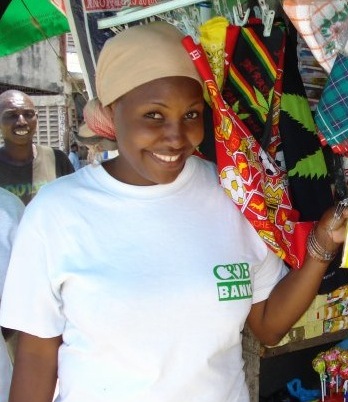
I then re-loaned that SAME $25 to Margret Koyeira who sold fruits & vegetables (pictured below) in Kisumu, Kenya. That loan has been 92% repaid. I've made 2 more loans since then which are both in the process of being repaid.


From KIVA's website:

Kiva's mission is to connect people, through lending, for the sake of alleviating poverty.

Kiva empowers individuals to lend to an entrepreneur across the globe. By combining microfinance with the internet, Kiva is creating a global community of people connected through lending.

Pendo Luisi, 27 years old, borrowed $175 to open a cafe in Dar es Salaam, Tanzania.

Kiva was born of the following beliefs:
  • People are by nature generous, and will help others if given the opportunity to do so in a transparent, accountable way.

  • The poor are highly motivated and can be very successful when given an opportunity.

  • By connecting people we can create relationships beyond financial transactions, and build a global community expressing support and encouragement of one another.

Kiva promotes:
  • Dignity: Kiva encourages partnership relationships as opposed to benefactor relationships. Partnership relationships are characterized by mutual dignity and respect.

  • Accountability: Loans encourage more accountability than donations where repayment is not expected.

  • Transparency: The Kiva website is an open platform where communication can flow freely around the world.

As of November 2009, Kiva has facilitated over $100 million in loans.

Saturday, April 17, 2010

more GMO talk...

So this is the first post from my phone - I hope it doesn't look too weird on a PC. I don't have internet at home therefore its difficult for me to post as I'd like to on the weekends. This is just a copy/paste job from the anti-Monsanto group on facebook. Follow them on there for more great updates!
It's good to know what companies to buy from when you find yourself out of local/family run range.


"One of the most powerful ways we, as concerned consumers, can impact the ever increasing use and propogation of GE foods is to recognize & spread the good word about companies who DON'T! Kettle Potato Chips are non-GMO. Their website states "Kettle Foods is very concerned about the issue of genetically modified organisms (GMOs) in our food supply. All of our potatoes and all of our cooking oils are non-GMO. Many Kettle Brand® products are certified organic, and thus do not contain any GMOs" How great is that?!?I've taken the initiative to contact them and thank them for their stance. You to can spread this around and reinforce the fact that consumers do not want to eat GE foods. You can contact them through their web site here: http://bit.ly/b4XKSd
Spread the word!
Post is copied with permission VIA FRANK PLUGHOFF - Thanks for the great info and idea Frank"

Thursday, April 15, 2010

Growing your own food.


The world of genetically modified food is a scary place where I don't want to live. The people who told us that PCB's, DDT, and Aspartame were "perfectly safe" are now telling us that GMO's are safe, too.

We know now that those are all very unsafe products/materials that lead to a wide array of problems and death.

What you can do:

- Shop at farmers markets : you can get high quality organic produce for the same price as conventional produce in the market. Why? You're not paying for shipping, packaging, marketing, etc. etc., you're paying the farmer and your money is going back into the local community.

Grow your own! : If you don't have any land, get some pots. No room for pots?
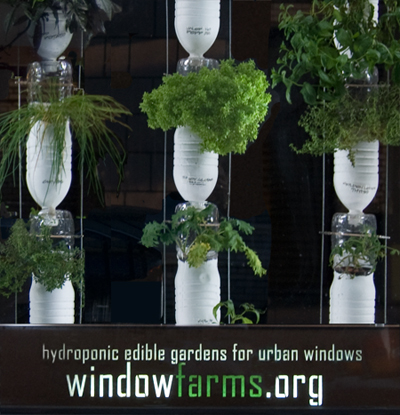
grow food in your windows: watch this video to find out how... http://www.youtube.com/watch?v=2fPZWJggyXY


Check this website for seeds - http://www.seedsavers.org/


Search for community gardens in your town as well. Most of the time you can "rent" a space for very little money and you can share tools/seeds/gardening tips with people in your neighborhood while strengthening your community!

First Post

I don't know about you - but I'm tired of constant doom & gloom news and hearing so much about what's wrong in the world without any mention of what's being done about it.

I've decided to make a post here at least once a day about a positive step being taken towards a local, national, or global issue. I will also include ideas for what YOU can do as an individual as they come up. Even if no one else reads this, it will help me be mindful of making those positive choices in life because what other choice do we have?

Simple Innovation Saves Lives

The photo below is a "PlayPump". Yes, it's a toy - a toy that brings healthy drinking water to people who previously had to walk miles every day for generally unsafe water out of contaminated lakes, streams, and other bodies of water.

The second photo shows how it works. It is a fairly simple innovation, but it's made huge impacts. The women and young girls who used to spend a good part of their day walking to collect water can now get it at home, AND have fun.
The time saved means these young girls can attend school and get an education.

More info found here:
http://www.waterforpeople.org/extras/playpumps/case-foundation-partnership.html
or watch a youtube on how PlayPumps work here: http://www.youtube.com/user/PlayPumps


More info found here:
http://www.waterforpeople.org/extras/playpumps/case-foundation-partnership.html

or watch a youtube on how PlayPumps work here: http://www.youtube.com/user/PlayPumps